South Bohemia -- Tips for trips
Tábor and the neighbourhood
welcome to Southern Bohemia.We have prepared a few interesting trips in Tábor and its surroundings. If you art interested,you can use our Mercedes Benz Vito - van , or Mercedes 220 E car,to make these trips.We offer our guest special prices.We also provide transport services in the Czech republic or abroad at favourable prices.
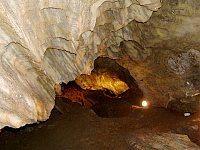 To the north of the village of Chýnov (10 km east of Tábor) hidden deep in the heart of a hill are places which should not remain unnoticed when visiting Tábor. In the year 1863 limestone caves were discovered in Pacova Mount (573 metres) and when explored they proved to be the second largest in Bohemia. There is a little lake at the very bottom of the cave. The caves are accesible in summer only.
( tel.: +420 381 299 034 )
In the land of pastures, fields and ponds, south of Tábor, from a distance the 68 meter high, narow Church tower dominanting the town of Soběslav invites you to the metropolitan centre of the unique part of southern Bohemia. The oldest data about Soběslav start from July 12th, 1293 and testify that since then, it has been an outstanding settlement that in 1390 was given the privilages of the royal town by the Rosenberg's. It is a charming little town located on a promontory above the Lužnice and the River Smutná, about 20 km south-west of Tábor. Bechyně was founded in 1323, and its partly preserved fortification walls date back to the 15th century. Patients in the local spa recover from rheumatism and various injuries. Bechyně is also famous for ceramics. Deposits of kaolin incited the establishment of a ceramic factory which closely cooperates with the local secondary school of ceramics - a very prestigious one. Tourists to Bechyně should not miss the museum of ceramics. The towns of Tábor and Bechyně are connected by the oldest electrified railway in the former Austro-Hungarian Empire. The town sezimovo Ústí was first mentioned in 1262. It was famous for its drapery, pottery and salt trade. In 1412 Jan Hus found refuge here for a while. Eight years later, in 1420, Sezimovo ˇustí was burned to the ground by Huss's followers who moved to Tábor afterwards. A new town was founded on the spot only in the year 1827.
In the surroundings, the surface of countless ponds glitters, on the southwest side unfold the Soběslavská Blata (Moors)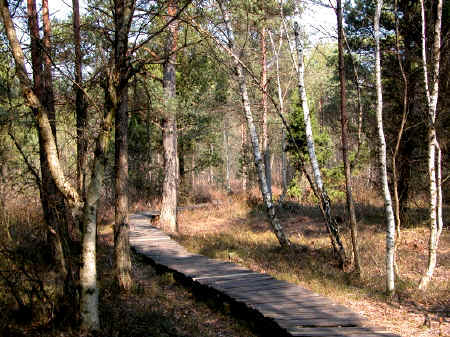 with their extensive peatbogs, an area with typical architecture of southbohemian folk baroque, national costumes, songs and tradition. The visitor will find many opportunities for enjoyable recreation in beautiful nature with possibilites of swimning, mushroompicking, fishing and interesting visits of the near surroundings.
( Informační a kulturní středisko Soběslav, Jirsíkova 34/I; tel.: +420 381 524 527 )
 It was designed by František Křižík who on June 1, 1903 sent the first electric train on a journey 24 km long.
The little town boasts another attraction - a Renaissance castle. It was designed by the Italian architect Baltasar Maggi of Arogna at the end of the 16th century. After periods of fame and decline underwent a thorough reconstruction, and in 1998 it was opened to the public.
( MěÚ Bechyně, nám. T.G.Masaryka 2; tel.: +420 381 211 012 )
Noteworthy is also the fact that Dr. Edvard Beneš, the second president of our republic. had his summer mansion built in Sezimovo Ústí I., and on September 3, 1948 he died there.
The ruins of the small Gothic castle Kozí Hrádek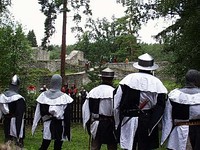 are situated near Sezimovo Ústí II. The castle was first mentioned in sources in 1377. It is still apparent from the ground plan that in the middle there used to be a mighty residential tower surrounded with a wooden barrier, a moat and a mound. In 1406 Vilém of Újezd took possesion of Kozí Hrádek. But the place became famous a bit later thanks to Jan Hus who, having been invited by Ctibor and Jan of Kozí, took refuge here in the years 1413 and 1414. Jan Hus wrote essays here and preached in the area. Hrádek burned down in the 15th century and from then on it has decayed. Today the remains are protected by the state and they are a popular target of tourists.
( MěÚ Sezimovo Ústí I, Dr. Edvarda Beneše 21; tel.: +420 381 263 175-6 )
České Budějovice
České Budějovice is the largest town in the region of South Bohemia. It is full of history and remarkable monuments, and of course, České Budějovice is very famous for its beer production.
The name of
the brewery and the beer relates to the place of its origin
– the town of České Budějovice. Since the 14th century the
official name of this city was Budweis. Only in 1918 was
the name changed into the Czech name of České Budějovice.
However, the indication Budweis is today the official
translation of the name of the city into many foreign
languages. The tradition of the production of beer in České
Budějovice began in 1265 when the Czech King, Přemysl
Otakar II. chartered the brewing rights for the town.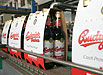 Budweiser
Budvar‘s, Visitors Centre will be opened to the public in
April 2005. The exposition vividly portrays the history of
the brewing industry in České Budějovice. The tour starts
with the projection of brewing inside a copper vessel then
goes on with a virtual visit through geological layers of
the artesian well. The visitors start with the Historical
Hall, where they are acquainted with the history of České
Budějovice and brewing traditions. Then they continue to
the Gothic-Renaissance Log Cabin, where the exposition of
medieval brewing can be seen. The influence of technology
on brewing is shown in the Age of Industry Hall. The
subsequent hall - the 20th Century Hall is devoted to the
modern history of brewing in České Budějovice.
Budweiser
Budvar‘s, Visitors Centre will be opened to the public in
April 2005. The exposition vividly portrays the history of
the brewing industry in České Budějovice. The tour starts
with the projection of brewing inside a copper vessel then
goes on with a virtual visit through geological layers of
the artesian well. The visitors start with the Historical
Hall, where they are acquainted with the history of České
Budějovice and brewing traditions. Then they continue to
the Gothic-Renaissance Log Cabin, where the exposition of
medieval brewing can be seen. The influence of technology
on brewing is shown in the Age of Industry Hall. The
subsequent hall - the 20th Century Hall is devoted to the
modern history of brewing in České Budějovice.
České Budějovice is a town of pilgrims, tourists, connoisseurs of art, an excellent cuisine, and a unique park exhibition centre. It is the commercial, economic, financial and a traffic centre of the region (including airports). Evidence has been found of human presence back to the primeval ages; town itself has been built and developed for generations by Czech, Germans, Italians and Jews. Nowadays, the town is known world-wide for its famous beer and pencils, whereas its past glory is rather to be found in the salt trade, shipping on the Vltava river, silver mining and the town's own mint. Once a royal town, a mining town and a regional capital, it is now a district capital.
The tower is located right next to St. Nicholas cathedral. It is a Gothic-Renaissance bell- and watch-tower with a small defense tower arround a spiral staircase attached to it as its entrance. Next to the tower stands the memorial of J. V. Jirsík, bishop of České Budějovice, a statue by J. V. Myslbek. The tower gallery provides an impressive view of the town's historical centre, the whole town and its surroundings, including Hluboká nad Vltavou, the areas of Týn nad Vltavou, Doudleby, Nové Hrady, Kleť and a substantial part of the Šumava region. The large square is surrounded by arcades and burgher's houses. Its paving includes a renowned erring stone. With its beautiful fountain in the middle it is considered one of the most remarkable squares of Europe. The town walls with the bastions "Železná Panna" (the Iron Maiden), "Otakarka" and "Rabštejnská věž" (the Otakar and Rabenstein towers), forming a panorama admired by painters, engravers, artists and poets, can be viewed from the island "Sokolský ostrov". The layout of the original fortification has been preserved in the circle of the town parks surrounding the historical centre.
( Městské info. centrum, nám. Přemysla Otakara II. 2 )
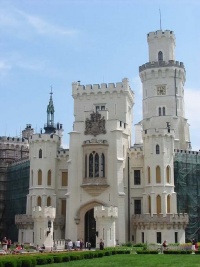
Červená Lhota

( tel.: +420 384 384 228 )
Jindřichův Hradec
The town of Jindřichův Hradec enjoyed its period of fame in the 16th century, when the lords of Hradec alternately held lively festivities and diplomatic consultations at the mansion there. Then too the mansion was magnificently rebuilt in Renaissance style and given costly interiors.
( tel.: +420 384 321 279 )
Orlík nad Vltavou

Since 1802 Orlík was the residence of the younger, so-called Orlík branch of the Schwarzenberg family. In the mid-19th century architect B. Grueber's rebuilding turned the originally medieval royal castle into a neo-Gothic comfortable mansion with richly furnished interiors.
Zvíkov
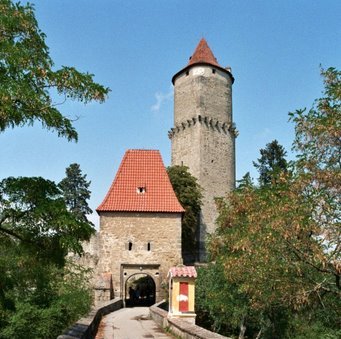
( tel.: +420 382 285 676 )
Český Krumlov
Česky Krumlov - the first UNESCO listed town in Czech Republic. Step back in time by walking through the romantic lanes of the medieval town you can visit the castle (the second largest in Czech Republic) with its splendid interiors.
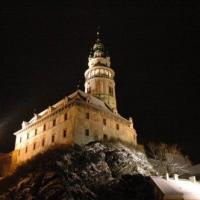 You can view the Renaisssance, Baroque and
other period interiors furnished with various artifacts
dating through the last five centuries.There is a priceless
collection of Flemiish tapestries as well as a large
collection of paintings, and special wall frescos used for
teaching in the 18th century,which were transferred here
from the Zlatá Koruna monastery. Worthy of mention are the
gilded horse carriage made in Rome in 1638 and the
equipment from the Eggenberg mint. Český Krumlov is one of
the most frequently visited places in Bohemia.
You can view the Renaisssance, Baroque and
other period interiors furnished with various artifacts
dating through the last five centuries.There is a priceless
collection of Flemiish tapestries as well as a large
collection of paintings, and special wall frescos used for
teaching in the 18th century,which were transferred here
from the Zlatá Koruna monastery. Worthy of mention are the
gilded horse carriage made in Rome in 1638 and the
equipment from the Eggenberg mint. Český Krumlov is one of
the most frequently visited places in Bohemia. Price-list
Room reservation
Map of the town
The town of Tábor
Editorial
Price-list
Room reservation
Map of the town
The town of Tábor
Editorial


Recommended options: